 It’s 2:00 AM. I’m driving through a mountain pass in the dead of winter, and my phone decides this is the perfect moment to die. Not low battery. Not airplane mode. Completely dead.
No GPS. No maps. No signal.
Just me, a winding road, and a whole lot of darkness.
That night changed how I think about navigation.
Like most drivers, I still use GPS every day. Smartphones are amazing for turn-by-turn directions, traffic updates, and finding the nearest gas station. But that experience reminded me of something we often forget: every piece of modern technology has a failure point.
Batteries run out.
Signals disappear.
Screens break.
And when they do, it helps to know where you're actually heading.
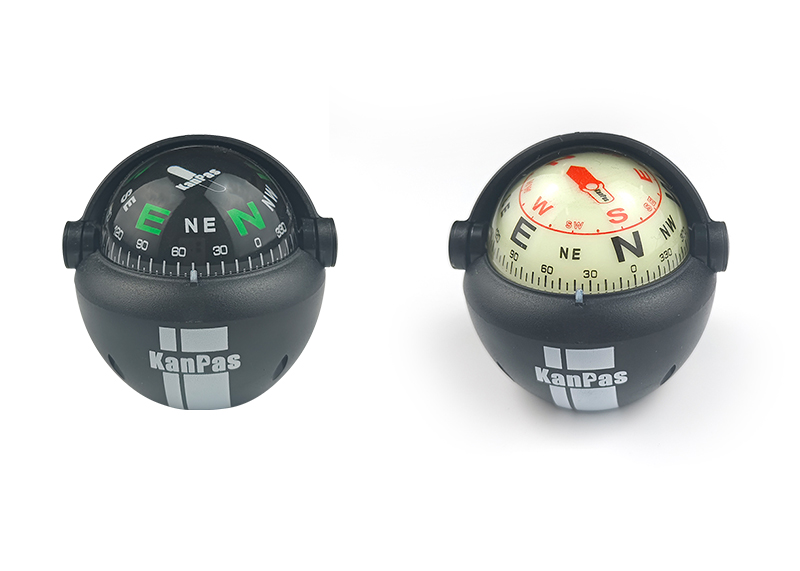
That's what led me to install a KanPas Vario V-41 dashboard compass on my vehicle. The Vario series includes the standard V-41 and the luminous V-41L, both designed to provide quick directional awareness without relying on batteries or electronic systems.
Months later, after road trips, bad weather, mountain drives, and plenty of daily commuting, I've come to appreciate something surprisingly old-fashioned:
Knowing where north is without needing a battery.
The Problem with "Always Connected" Navigation
Don't get me wrong. GPS is fantastic.
But the more I drive, especially on long-distance road trips and outdoor adventures, the more I notice its limitations.
Phones overheat on dashboards during summer.
GPS signals disappear inside tunnels.
Battery anxiety becomes real when you're hours away from a charger.
And in remote areas, sometimes the navigation app simply doesn't know what's happening around you.
What I wanted wasn't another navigation app.
I wanted a backup that simply works.
Something that doesn't need charging.
Something that doesn't need updates.
Something I can glance at instantly without tapping a screen.
That's where a mechanical dashboard compass earns its place.
What Makes the KanPas Vario V-41 Different?
I've owned a few dashboard compasses over the years.
Most were inexpensive accessories that looked useful but never inspired much confidence. Some reacted slowly. Others were difficult to read while driving. A few seemed more decorative than functional.
The KanPas Vario V-41 and luminous V-41L dashboard compasses feel different.
They're designed as practical driving instruments rather than novelty accessories.
And after using one daily, a few features stand out.
It Just Reads Naturally
The first thing I noticed was the Direct-Read Driving Dial.
Traditional compasses often require a bit of mental interpretation. You look at the compass, process the needle position, and then work out your actual heading.
The Vario series approaches things differently.
The heading is designed to be read directly from the driver's perspective.
That means when I glance at the dashboard compass, I instantly know whether I'm heading west, southeast, or north without needing to think about it.
It sounds like a small improvement.
In practice, it's one of those details you appreciate every single day.
Two Scales, One Quick Glance
Another feature I didn't realize I'd appreciate so much is the Dual-Scale Navigation system.
Most of the time, I only care about one thing: the direction I'm traveling.
That's where the primary driving scale comes in.
But occasionally I want a broader understanding of my surroundings, especially when using a paper map during outdoor trips or discussing routes with friends.
The secondary standard compass scale provides that extra context.
It's a simple idea, but it makes the dashboard compass more versatile than many basic models.
Low-Light Visibility When It Matters
I spend a lot of time driving before sunrise and after sunset.
Rural highways.
Mountain roads.
Parking garages.
Long tunnels.
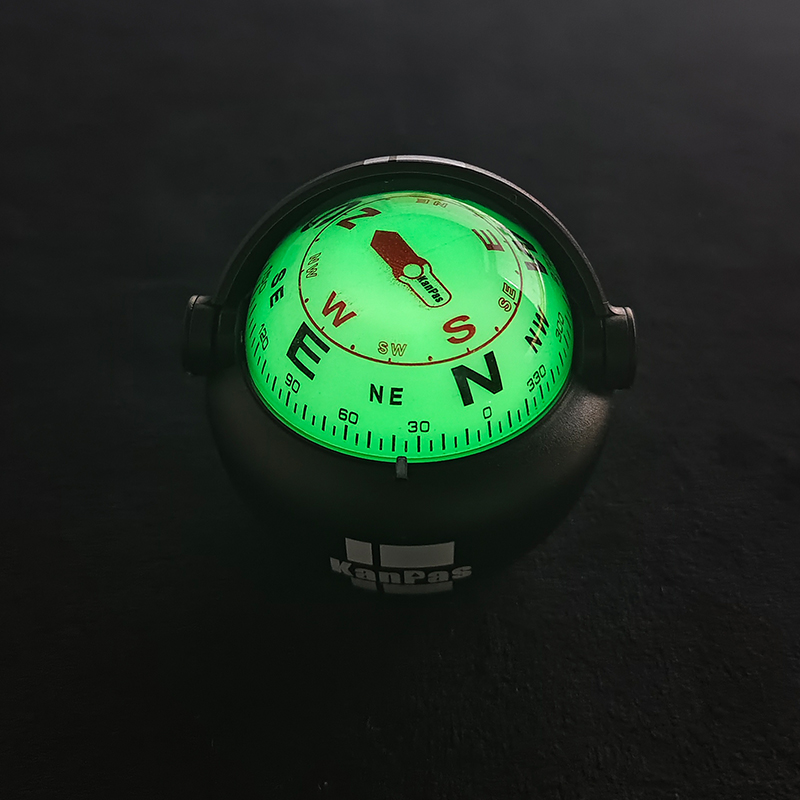
The Vario V-41L includes a luminous dial that absorbs ambient light during the day and remains visible in low-light conditions.
The first time I drove through a long tunnel with it, I immediately understood why people appreciate a luminous dashboard compass.
No batteries.
No switches.
No power source.
Just a clear heading whenever you need it.
It's one of those features you don't think about until the moment it becomes useful.
Built for Everyday Temperature Changes
If you've ever left a vehicle parked outdoors in summer or winter, you know how quickly temperatures inside the cabin can change.
Liquid-filled compasses can be affected by these shifts, especially when temperatures rise or drop significantly over the course of a day.
That’s where the Adaptive Variable Capsule comes in. The housing is designed to help accommodate fluid expansion and contraction caused by normal temperature fluctuations, supporting smoother operation in everyday driving conditions.
In other words, it’s designed to handle the temperature changes that come with regular vehicle use—whether you’re heading out on a hot afternoon or starting the car on a cold winter morning.
No Batteries. No Cables. No Updates.
This might be my favorite feature.
The KanPas Vario V-41 and V-41L dashboard compasses are completely mechanical.
No charging cables.
No batteries.
No software updates.
No pairing process.
No startup screen.
Once installed, they simply do their job.
In a world where almost every gadget demands attention, there's something refreshing about a tool that quietly works in the background every day.
Why a Dashboard Compass Still Matters
Some people ask why anyone would use a dashboard compass when GPS exists.
I think that's the wrong question.
A dashboard compass isn't trying to replace GPS.
It's there to complement it.
GPS tells you where to turn.
A compass tells you where you are heading.
GPS depends on power and signals.
A compass depends on physics.
The two work remarkably well together.
And when technology inevitably has a bad day, the compass is still there doing exactly what it has always done.
Who Is the Vario V-41 For?
After using it for a while, I think the answer is surprisingly broad.
Road Trippers
For anyone covering long distances through unfamiliar territory.
Overlanders and Off-Road Drivers
When trails, backroads, and remote routes become part of the journey.
Night Drivers
Especially those who choose the luminous V-41L model.
Outdoor Enthusiasts
Campers, explorers, and adventurers who appreciate reliable backup navigation.
Practical Drivers
People who simply like having a dependable tool available when technology falls short.
Final Thoughts: The Confidence of Knowing Your Direction
There is something reassuring about looking down and instantly knowing your heading.
Not because an app tells you.
Not because a battery still has charge.
But because a simple mechanical instrument is quietly doing exactly what it was designed to do.
That's what the KanPas Vario V-41 and V-41L dashboard compasses offer.
They're not meant to replace modern technology.
They're meant to provide confidence when technology isn't enough.
And after months of using one, I've found that confidence is surprisingly valuable.
Sometimes the simplest navigation tool is still one of the most useful.
Frequently Asked Questions
Does the Vario V-41 require batteries?
No. The Vario V-41 and V-41L operate using a mechanical magnetic system and require no batteries or charging.
What is the difference between the V-41 and V-41L?
The V-41L features a luminous dial designed for improved visibility in low-light conditions, while the V-41 uses a standard dial.
Can a dashboard compass replace GPS?
A dashboard compass is best used as a complementary navigation tool. It provides continuous directional awareness even when GPS systems are unavailable.
Why use a dashboard compass if I already have a smartphone?
A dashboard compass provides instant directional awareness without relying on batteries, charging cables, cellular networks, or satellite signals.
Can a dashboard compass be affected by magnetic interference?
Like all magnetic compasses, a dashboard compass can be influenced by nearby metal parts or magnetic sources inside a vehicle. For the best performance, it should be installed in a suitable position away from strong magnetic interference.
Ready to Navigate with Confidence?
The KanPas Vario V-41 and V-41L combine direct-read driving orientation, dual-scale navigation, mechanical reliability, and battery-free operation in one compact dashboard compass.
Whether you're commuting, road-tripping, exploring remote roads, or simply looking for a dependable backup to GPS, the Vario series offers a simple way to stay aware of your direction wherever the road leads.
Explore the KanPas Vario V-41 and V-41L dashboard compasses and find the model that fits your driving style.


 It’s 2:00 AM. I’m driving through a mountain pass in the dead of winter, and my phone decides this is the perfect moment to die. Not low battery. Not airplane mode. Completely dead.


